

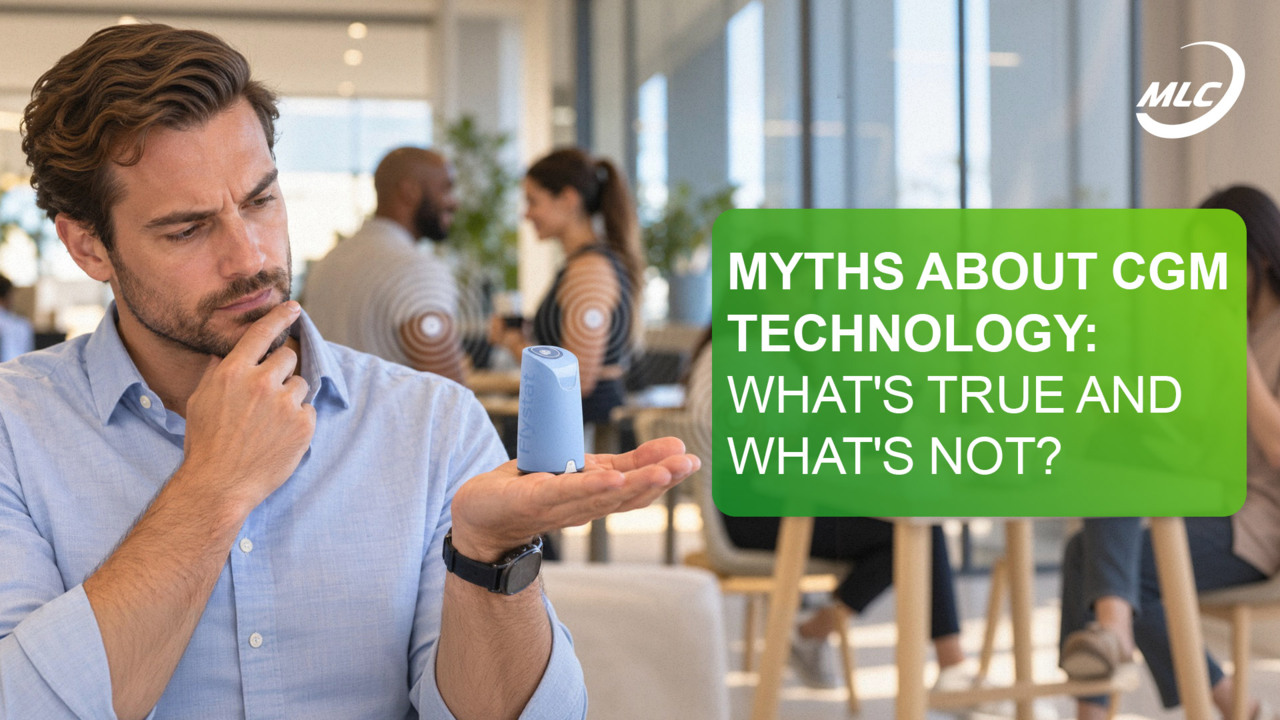
Continuous glucose monitoring (CGM) systems are transforming diabetes care, yet plenty of myths still surround the technology. Let's take a closer look at the most common ones.
Myth #1: CGM sensors are complicated.
Modern CGM systems are built for real people, not just for experts. It takes seconds to apply, data streams to your phone in real time, and the app is intuitively designed.
Myth #2: CGM is only needed by people with diabetes.
CGM is recommended for people with type 1 and type 2 diabetes, expectant mothers, athletes, and people with prediabetes. CGM is increasingly being used as a tool to understand your body and optimize nutrition, sleep, and physical activity.
Myth #3: The sensor hurts and interferes with everyday life.
Modern sensors are completely painless to apply. They don't hold you back — you can sleep, work out, shower, and swim without a second thought. They won't snag on your clothes and stay virtually invisible.
Myth #4: CGM is simply another method of measuring glucose.
A one-off measurement is just a snapshot, whereas CGM gives you the full picture of your glucose, continuously. Users see not just the current reading but also the direction it's trending, can track their glucose throughout the day and night, and gain a better understanding of how food, activity, and other factors affect their levels.
Myth #5: CGM is too costly.
In many countries, CGM is already covered by public health insurance. And manufacturers are constantly working to reduce the cost of the device while maintaining quality and comfort.
MLC is building the Flystat CGM system with a goal of making the technology intuitive, accurate, comfortable, and reliable, so more people can take charge of their health without limits.
Technology keeps changing. Myths fade. The future belongs to accessible and accurate health monitoring.